

What is Rudraksha?
In Vedic tradition, Rudraksha is not merely a sacred bead but a living astrological remedy, intricately connected to the forces that shape human destiny. Every Mukhi of Rudraksha carries a specific vibrational signature governed by a planet, deity, and cosmic principle, making it deeply relevant to one’s zodiac sign (Rāśi) and birth star (Nakshatra). Just as planets influence different areas of life through the birth chart, the correct Rudraksha works as a harmonizing tool—strengthening benefic planets, pacifying malefic influences, and aligning the wearer with their natural karmic path. When selected in accordance with one’s Rāśi and Nakshatra, Rudraksha becomes a powerful bridge between astrology and spiritual science, offering balanced growth in health, prosperity, relationships, and inner evolution.
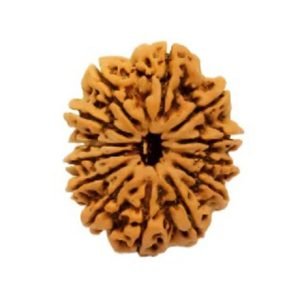
Types of Rudraksha
Rudraksha is identified by the number of “mukhis” or faces. These mukhis are formed by the lines on the Rudraksha that segment the bead – ranging from 1 to 27 mukhi . The cross section of a Rudraksha would show that each of these mukhis translate to “compartment” like structures inside the Rudraksha. The mukhis, the shape, size and color of the Rudraksha beads determine its value.
There are a few other types of Rudrakshas too
Mukhis
Gauri Shankar Rudraksha is formed when two Rudrakshas are naturally conjoined together – these too are available in nature in various “mukhis”
Mukhis
Garbh Gauri Rudraksha
Garbh Gauri Rudraksha is also formed when two Rudrakshas are naturally conjoined together and when one bead is smaller than the other
Garbh Gauri Rudraksha
Ganesh Rudraksha
Ganesh Rudraksha bead has a trunk like projection on it outer surface representing Lord Ganesh
Ganesh Rudraksha
Trijuthi Rudraksha
These are three Rudraksha beads conjoined together naturally which represents the Tridevs – Lord Brahma, Lord Vishnu and Lord Mahesh.
Trijuthi Rudraksha
Savar Naag Rudraksha
Savar Naag Rudraksha is a Rudraksha bead that has a one mukhi bead attached to it, naturally.